
Religion

The Way of Truth with Grace: A Twelve-Point Manifest
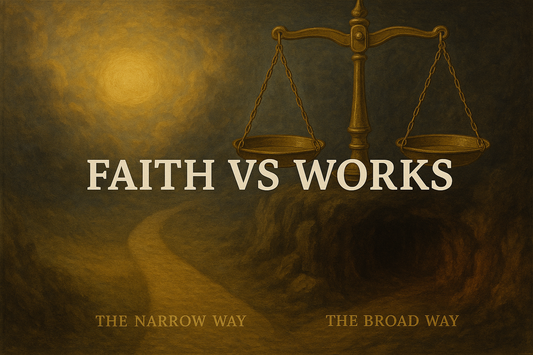
When all arguments fade and certainties dissolve, only love endures. The Way of Truth with Grace is not a road that ends, but one that circles back to the heart. Truth without grace is a sword; grace without truth is a shadow. Together they become light — soft enough to heal, strong enough to guide. And when our striving is done, and faith has learned to rest, we shall find that the hand that led us was grace, and the voice that called us home was truth.
- Click to read the full article
The Way of Truth with Grace: A Twelve-Point Manifest
When all arguments fade and certainties dissolve, only love endures. The Way of Truth with Grace is not a road that ends, but one that circles back to the heart. Truth without grace is a sword; grace without truth is a shadow. Together they become light — soft enough to heal, strong enough to guide. And when our striving is done, and faith has learned to rest, we shall find that the hand that led us was grace, and the voice that called us home was truth.
- Click to read the full article
Predestination and the Paths of Grace: How Paul Divided the Reforma...
When Paul wrote that God “predestined us before the foundation of the world,” he ignited a fire that still burns through Christianity. Calvin saw in those words the thunder of divine control — a God who chooses and never wavers. Luther heard a gentler echo, a mystery of mercy that invites faith but defies reason. Wesley, however, heard a heartbeat — the pulse of a God whose love reaches every soul and restores freedom to choose Him. Three men. One apostle. And from Paul’s pen flowed three visions of grace that would split the Reformation — sovereignty, faith, and freedom — each claiming to reveal the true rhythm of salvation.
- Click to read the full article
Predestination and the Paths of Grace: How Paul Divided the Reforma...
When Paul wrote that God “predestined us before the foundation of the world,” he ignited a fire that still burns through Christianity. Calvin saw in those words the thunder of divine control — a God who chooses and never wavers. Luther heard a gentler echo, a mystery of mercy that invites faith but defies reason. Wesley, however, heard a heartbeat — the pulse of a God whose love reaches every soul and restores freedom to choose Him. Three men. One apostle. And from Paul’s pen flowed three visions of grace that would split the Reformation — sovereignty, faith, and freedom — each claiming to reveal the true rhythm of salvation.
- Click to read the full article
The Four Gospel Writers: The Observer, The Fighter, The Lover, and ...
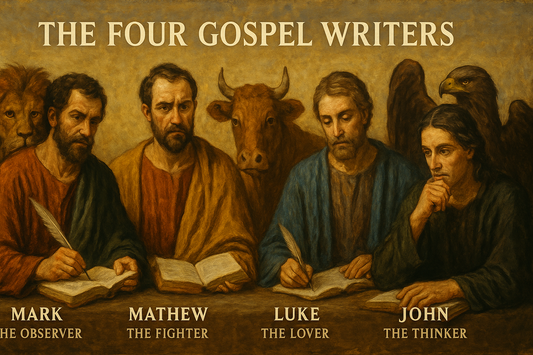
Four men, four minds, one message. Mark races like a journalist chasing the truth. Matthew fights like a warrior defending prophecy. Luke heals with a heart that feels every wound. John soars like an eagle, seeing eternity in a single word. Together, they reveal not four stories, but one living Christ — seen, argued, loved, and understood.
- Click to read the full article
The Four Gospel Writers: The Observer, The Fighter, The Lover, and ...
Four men, four minds, one message. Mark races like a journalist chasing the truth. Matthew fights like a warrior defending prophecy. Luke heals with a heart that feels every wound. John soars like an eagle, seeing eternity in a single word. Together, they reveal not four stories, but one living Christ — seen, argued, loved, and understood.
- Click to read the full article

Predestination and Free Will: Paul, John Wesley, and the Thread of ...
In the grand tapestry of God’s creation, Paul’s certainty and Wesley’s compassion come together in harmony. Paul shows us a God whose will cannot fail — the Weaver whose hands hold every thread from beginning to end. Wesley reminds us that within that design, we are not weavers but living threads, choosing at every crossroad whether to follow the pattern of grace or drift from it. Predestination secures the outcome, yet free will gives meaning to the journey. Each choice — to love, to forgive, to believe — keeps our thread aligned with divine purpose. In the end, the masterpiece is complete: God’s sovereignty unbroken, human freedom honored, and grace woven through it all.
- Click to read the full article
Predestination and Free Will: Paul, John Wesley, and the Thread of ...
In the grand tapestry of God’s creation, Paul’s certainty and Wesley’s compassion come together in harmony. Paul shows us a God whose will cannot fail — the Weaver whose hands hold every thread from beginning to end. Wesley reminds us that within that design, we are not weavers but living threads, choosing at every crossroad whether to follow the pattern of grace or drift from it. Predestination secures the outcome, yet free will gives meaning to the journey. Each choice — to love, to forgive, to believe — keeps our thread aligned with divine purpose. In the end, the masterpiece is complete: God’s sovereignty unbroken, human freedom honored, and grace woven through it all.
- Click to read the full article
The Trinity Reimagined: God as the Universe, Jesus as the Universal...
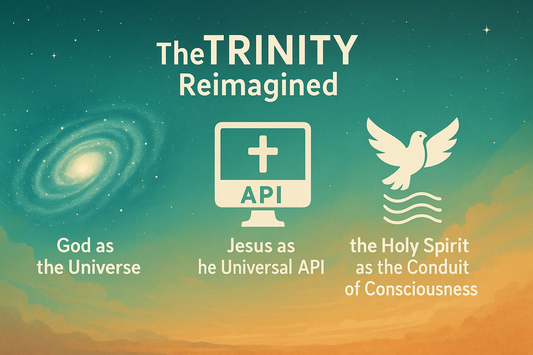
Imagine the Trinity through the lens of modern science. The Father is not a distant old man in the clouds but the cosmic architect — the pulse of gravity, light, and quantum law that keeps reality humming. Jesus is the universal API, the divine interface that translates infinite power into human understanding. He’s the access point — open to everyone, everywhere, without bottlenecks. And the Holy Spirit? Think of Him as the living conduit of consciousness, the invisible current that synchronizes your mind, your choices, and your soul with the heart of God.
This is not a myth in scientific disguise — it’s faith reinterpreted for an intelligent age. The universe becomes His cathedral, science His scripture, and consciousness His communion. The divine system never crashes, never lags, and the connection remains eternal.
- Click to read the full article
The Trinity Reimagined: God as the Universe, Jesus as the Universal...
Imagine the Trinity through the lens of modern science. The Father is not a distant old man in the clouds but the cosmic architect — the pulse of gravity, light, and quantum law that keeps reality humming. Jesus is the universal API, the divine interface that translates infinite power into human understanding. He’s the access point — open to everyone, everywhere, without bottlenecks. And the Holy Spirit? Think of Him as the living conduit of consciousness, the invisible current that synchronizes your mind, your choices, and your soul with the heart of God.
This is not a myth in scientific disguise — it’s faith reinterpreted for an intelligent age. The universe becomes His cathedral, science His scripture, and consciousness His communion. The divine system never crashes, never lags, and the connection remains eternal.
- Click to read the full article
Billy Graham’s Political Conscience and Joshua’s Failed Test of Faith
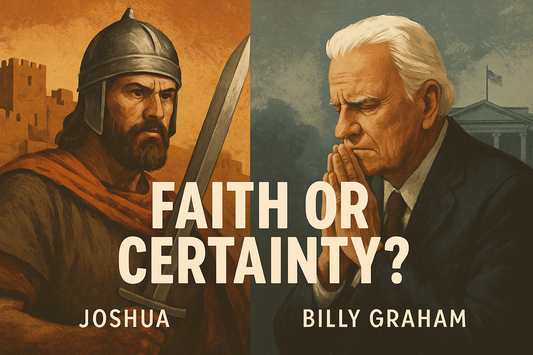
When prophets stand before power, some raise the sword while others bow in prayer. Joshua marched on Jericho with divine certainty; Billy Graham knelt in the Oval Office with trembling doubt. One believed God had chosen his side. The other feared he might never know which side God was on. Between them lies the oldest moral battlefield — the peril of confusing faith with favoritism.
Joshua’s conquest scorched cities in the name of holiness, mistaking command for comprehension. Billy Graham, haunted by his closeness to presidents, prayed instead that “the right side — God’s side — would win, even if it wasn’t mine.” His restraint became the faith Joshua never learned: that moral victory begins where certainty ends.
- Click to read the full article
Billy Graham’s Political Conscience and Joshua’s Failed Test of Faith
When prophets stand before power, some raise the sword while others bow in prayer. Joshua marched on Jericho with divine certainty; Billy Graham knelt in the Oval Office with trembling doubt. One believed God had chosen his side. The other feared he might never know which side God was on. Between them lies the oldest moral battlefield — the peril of confusing faith with favoritism.
Joshua’s conquest scorched cities in the name of holiness, mistaking command for comprehension. Billy Graham, haunted by his closeness to presidents, prayed instead that “the right side — God’s side — would win, even if it wasn’t mine.” His restraint became the faith Joshua never learned: that moral victory begins where certainty ends.
- Click to read the full article